



Live It Up Movement - Lifestyle Habit Changes to Prevent Chronic Disease and U.S. Medicare Bankruptcy
U.S. Chronic Condition Rate & Health Care Costs
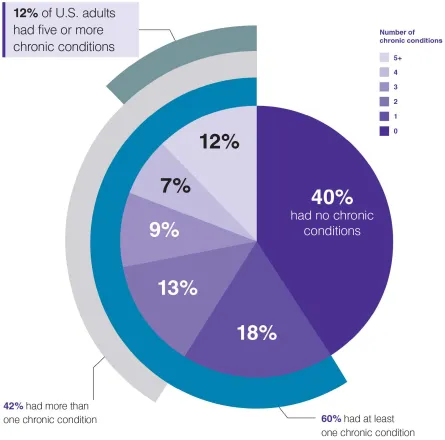
According to the RAND Corporation’s healthcare report on Multiple Chronic Conditions (MCCs) – a chronic condition is a physical or mental health condition that lasts more than one year and causes functional restrictions or requires ongoing monitoring or treatment. It is a long-term unhealthy condition that can be considered as a disease. The United States spent $4 Trillion on health care cost, ranked #1 in the world. About 60% of the US adults or 81% of the US seniors have one or more kinds of chronic diseases that used almost 90% of the nation’s health care budget. That means the remaining 40% of the healthy adults use merely 10% of the health care cost.
Chronic Conditions Breakdown
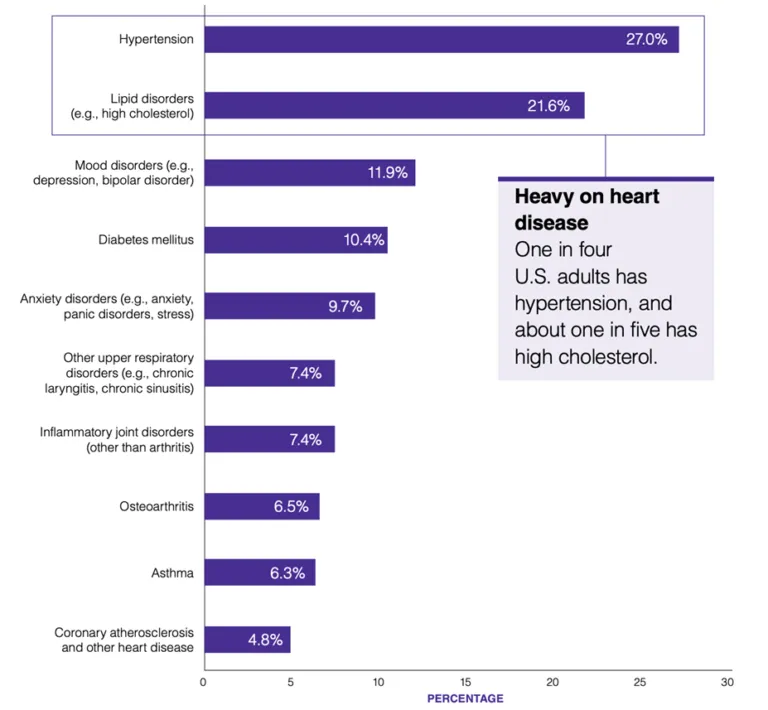
Chronic conditions exist in both physical and mental forms. One in four U.S. adults has hypertension, and one in five has high cholesterol (lipid disorders). Mental disorders – mood, and anxiety disorder collectively account for 21.6% of the chronic conditions in the U.S.
Chronic Conditions & Health Care Cost
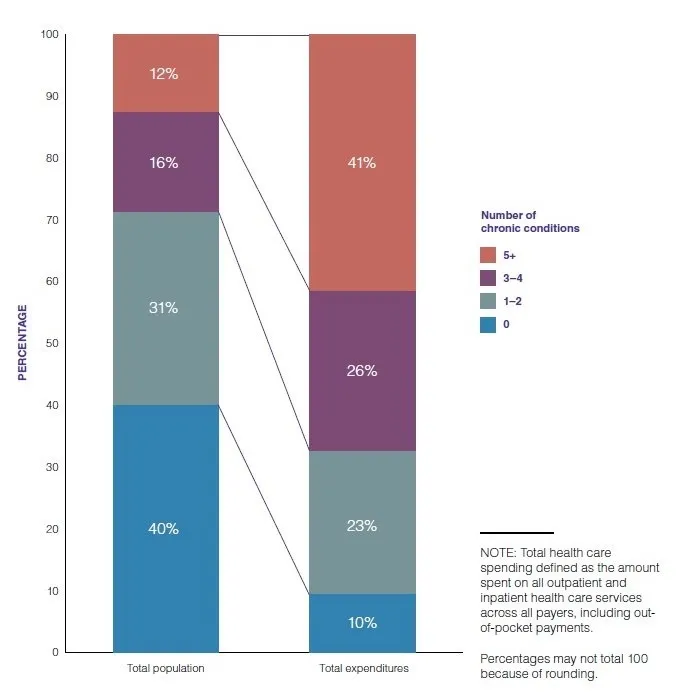
The rising prevalence of chronic condition is a challenge to the public health. We spent $4 trillion on health care, of which 90% or $3.6 trillion is being spent on treating chronic conditions. The remaining 40% of the healthy population uses merely 10% of the care cost. Each chronic condition shortens your lifespan by 1.8 years, according to Rand Corporation MCC report.

Chronic Conditions & COVID-19 Mortality
According to a CDC report on March 31st, 2020, 94% of the U.S. COVID-19 mortality were patients with underlying condition(s). Therefore, chronic conditions are the leading risk factor for COVID-19 mortality.
Evidence-Based Habits to Prevent Chronic Disease
Fortunately, Harvard School of Public Health study reveals that following 5 simple habits may prolong your life by 10 years or more. The study started by following participants starting at the age of 50. The 5 healthy habits are no smoking, no excess drinking, regular exercise, diet, and weight control. The result shows that participants were 82% less likely to die from cardiovascular disease and 65% less likely to die from cancer when compared to those with the least healthy lifestyles throughout the 30-year study period.
Stanford Center on Longevity’s Study discovered that sleep, stress management, social engagement, and financial security have significant impact to your quality of life. One of these poor lifestyle habits can lead to other poor lifestyle habits and cause chronic diseases such as heart disease, diabetes, depression, and obesity. Stanford concluded that practicing these healthy habits can prevent chronic disease, improve quality of life, and extend longevity. The Liu Foundation thus integrated the 4 Stanford healthy habits to educate, motivate, coach, and condition personal behavior change to benefit public health.
According to the Liu Foundation’s physician advisors, Dr. C.P. Chang and Dr. Xin Wang, getting annual medical checkups is critical to prevent chronic disease and maintain good health. Physicians recommend getting a doctor’s checkup once a year for most people and semi-annually for seniors.